
Methadone Resources
-
Pharmacy-based Methadone: Analysis of Laws and Regulations (2024)
The Heller School for Social Policy and Management at Brandeis University and the Legislative Analysis and Public Policy Association, together published a report that includes a comprehensive review of the laws and regulations that apply to methadone for opioid use disorder (OUD) to determine which laws and regulations would need to be amended in order to support pharmacy-based methadone treatment for OUD. This analysis (1) includes a discussion of the agencies involved in governing methadone for OUD treatment; (2) explains the provision in federal Controlled Substances Act that creates the regulatory scheme for methadone treatment; (3) describes DEA regulations governing Narcotic Treatment Programs; and (4) summarizes the general types of state laws and regulations that place additional restrictions on methadone for OUD treatment.
-
Pharmacy-Based Methadone for Opioid Use Disorder Toolkit
Currently, only opioid treatment programs (OTPs) can provide methadone for OUD, with limited exceptions. Patient advocacy groups, clinicians who care for people with OUD, professional organizations, scientists, and policymakers have called for offering methadone in community pharmacies as an alternative to the current delivery system. Pharmacies are the most accessible healthcare environment in the US and are well-suited to offer overdose prevention efforts, including MOUD. There are logistical, legal, and financial considerations to offering methadone for OUD in community pharmacies in the US. We conducted a project with the goals of understanding the possibilities and barriers to:
1. increasing access to methadone for OUD via pharmacy-based treatment
2. identifying the policy changes required to facilitate pharmacy-based methadone treatment, and
3. Developing business models for pharmacy-based methadone treatment
Support for this project was provided by The Pew Charitable Trusts. The views expressed herein are those of the authors and do not necessarily reflect the views of The Pew Charitable Trusts.
-
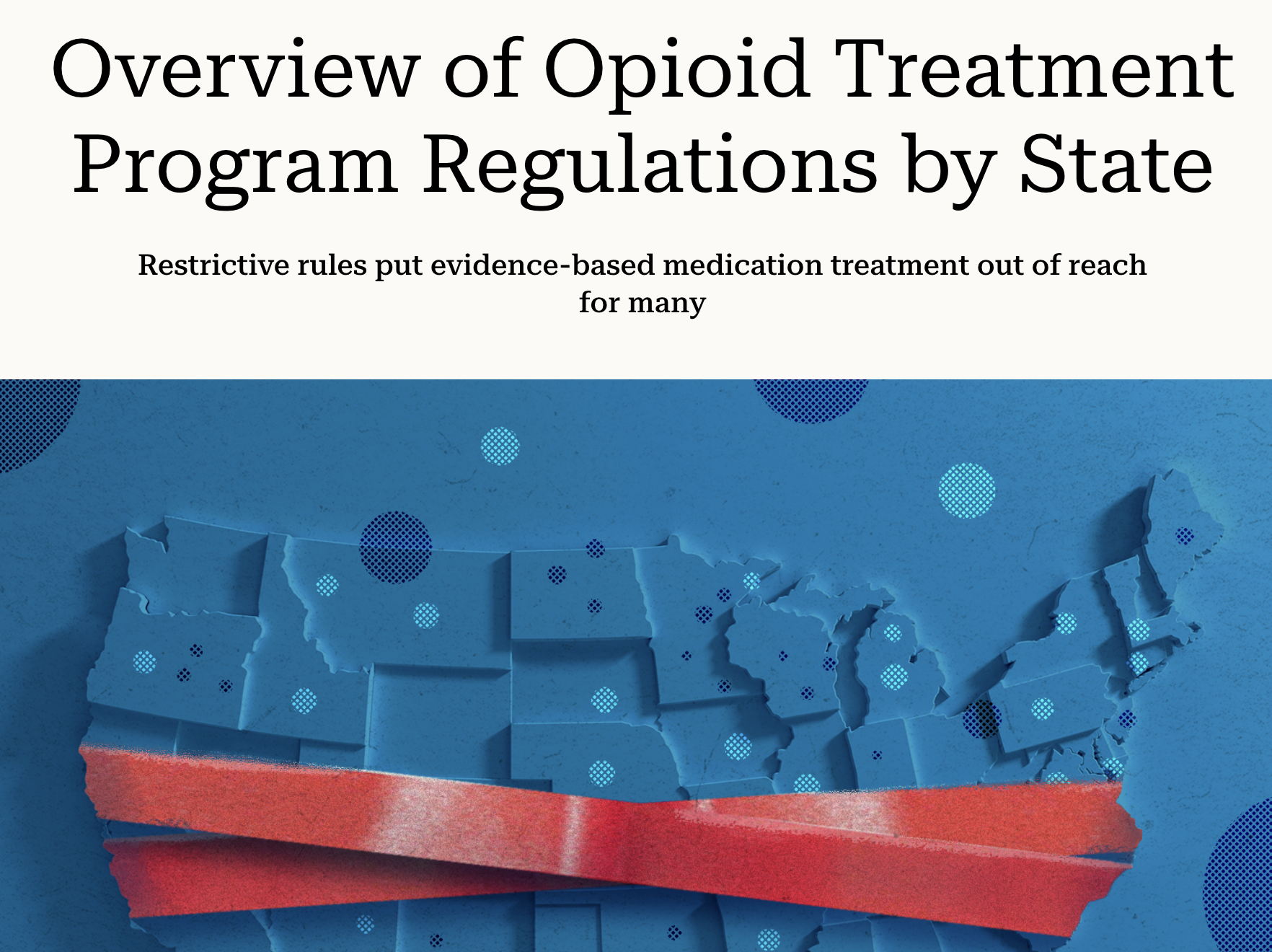
OTP State Program Regulations
Opioid treatment programs (OTPs) are the only health care facilities that can offer patients all three forms of FDA-approved medication for opioid use disorder (OUD): methadone, buprenorphine, and injectable extended-release naltrexone. Nearly all states have rules governing OTPs that are not based on evidence and limit access to care or worsen patient experience.
These rules governing the establishment, operation, and provision of care at OTPs exist at both the federal and state levels: The federal government establishes baseline requirements for OTPs, and states layer additional requirements on top of them. State policymakers have the opportunity to enhance access to this medication and improve the quality of OTP services, as well as remove regulations that exceed federal restrictions and limit access to care.